
Bakery Inventory Management Software
Bakery Inventory Management Software — Silos, Sponge, Trolleys, Freezers & Routes Under Control
This topic is part of the SG Systems Global regulatory & operations glossary.
Updated November 2025 • bakery inventory management software, bakery WMS, silos & bulk ingredients, racks & trolleys, par-bake & frozen dough, FEFO, allergens, traceability • Industrial & Retail Bakery, Frozen & Par-Bake, QSR Supply, Ingredients & Dry Mixes
Bakery Inventory Management Software is the layer between your flour silos, dough room, proofers, ovens, freezers, racks, trolleys and delivery routes—and the financial system that only sees “bags, cases and pallets.” It keeps track of what you have, where it is, what condition it’s in, and where it’s going next, in bakery-specific terms: flour and minor ingredients, sponge and preferments, dough balls and slabs, par-baked crusts, frozen inventory, finished bread and pastries, and returned or stale product.
Where a generic WMS might see “Item 123, 10 cases in bin A-01,” Bakery Inventory Management Software sees: “Strong flour, silo 2, tied to today’s flour scaling runs”, “Sponge batches in the proofing room,” “Part-baked baguettes in freezer bay 3, rack 17,” and “Retail returns in the cull area awaiting write-off or re-use.” It connects inventory to bakery manufacturing reality, not just to generic pallets.
“If your bakery system knows how much flour you bought, but not what’s in each silo, which dough balls are in which freezer rack, or which routes are carrying what returns, you don’t have bakery inventory management. You have hope and spreadsheets.”
TL;DR: Bakery Inventory Management Software gives bakeries a real-time, lot-level view from flour silos and ingredient stores through sponge & dough, proofers, ovens, freezers, trolleys and routes. It:
- Tracks ingredients and packaging with bins, lots, allergens and FEFO.
- Manages WIP states like sponge, preferments, dough batches, cut pieces and par-bake.
- Controls frozen dough and baked inventory with dough ball freezer inventory management and frozen ingredient slotting.
- Tracks racks, pans and bakery trolley flow between ovens, coolers and routes.
- Feeds accurate, traceable stock positions to ERP or QuickBooks while satisfying lot traceability, allergen zoning and customer/retailer expectations.
1) Why bakeries need specialised inventory management—hard truths
- Inventory moves fast and changes state constantly. Flour becomes sponge, then dough, then proofed pieces, then baked, then sliced, then stale or returned. Generic inventory tools are not built for that lifecycle.
- Allergens, seeds and toppings amplify risk. Sesame, nuts, egg and dairy move through production and packaging. Without proper inventory zoning and changeover control, one missed rack can trigger a major recall.
- Frozen and par-bake complicate things. Dough balls, frozen slabs and par-baked items may live in the system for weeks or months, before being finished or shipped. If you can’t see what is where and how old it is, waste escalates.
- Routes and returns matter. For wholesale and QSR supply, inventory “on route” and “coming back” is as important as what’s in the cooler. Without visibility, you’ll bake the wrong products and mis-serve your routes.
- Margin is thin. Overscaling ingredients, losing tracks of racks and letting frozen inventory die in the corner are pure margin leaks.
2) Scope of Bakery Inventory Management Software
| Area | What it controls | Glossary anchors |
|---|---|---|
| Ingredients & Packaging | Flour, sugar, fats, improvers, seeds, inclusions, liners, bags, cartons | Flour Scaling & Silo Weighing, Par Level Management (Bakery) |
| Silos & Bulk Storage | Silo contents, flour lots, intake, changeovers and contamination risks | Flour Scaling & Silo Weighing |
| Sponge & Preferments | Sponge, poolish, biga, levain batches, status, use-by windows | Sponge and Dough System, Preferment Scaling |
| Dough & WIP | Dough batches, tubs, cut pieces, tray IDs, proofing stages | Dough Rheology Assessment, Proofing Room Inventory Tracking |
| Racks, Pans & Trolleys | Which racks and trolleys carry which products, where they are | Bakery Trolley Flow Control, Pan, Tin & Sheet Asset Tracking |
| Cooling, Slicing & Bagging | Cooling racks, sliced/unsliced inventory, bag types and clip codes | Crust & Crumb Handling Inventory |
| Freezers & Par-Bake | Dough ball, slab and par-bake inventory; bays, racks, slotting rules | Dough Ball Freezer Inventory Management, Frozen Ingredient Slotting (Bakery) |
| Finished Goods & Staging | Case and rack-level finished product, staging lanes, dock control | Post-Bake Inventory |
| Routes & Returns | Inventory on vehicles, route loading and returned/stale goods | Returns/RMA |
| Allergens & Zoning | Allergen zones, product families, changeovers, segregation | Allergen Control Program |
| Traceability & Compliance | Lot genealogy, BRCGS/SQF expectations, mock recalls | Traceability, BRCGS Traceability |
3) Ingredients & silos — from bags and trucks to controlled bulk
Bakery inventory management starts with how ingredients are received and stored:
- Flour silos. Flour scaling & silo weighing logic in the software ties each flour delivery to a silo, with mill, protein/ash spec, lot and FEFO rules.
- Minor and micro ingredients. Salt, sugar, improvers, enzymes, seeds and inclusions live under minor and micro ingredient stations (bakery), with lot and allergen tracking.
- Packaging. Bags, clips, films, cartons and labels are treated as full inventory citizens, not afterthoughts, enabling clip-code-based traceability.
Bakery Inventory Management Software ensures that what’s in each silo, pallet or tote is known by lot, allergen, spec and age—not just by approximate weight.
4) Sponge, preferments, dough & WIP inventory
The dough room often has the highest value WIP in the bakery:
- Sponge and dough systems. Each sponge, poolish, biga or levain is tracked as its own WIP lot under the Sponge and Dough System, with fill, fermentation and use-by times.
- Dough batches. Dough bowls and line-fed mixers create batches; each batch has an ID, recipe, and link to upstream sponge and ingredient lots.
- Proofing room inventory. Proofing room inventory tracking knows which racks, shelves and boards hold which dough batches and products at any given time.
This makes “what dough is where, and for how long?” a system query, not a walk-around question.
5) Racks, pans & trolleys — moving inventory on wheels
In bakeries, a lot of your WIP and finished goods live on wheels:
- Bakery trolley flow control. Bakery trolley flow control tracks each trolley’s current location and contents: proofing room, oven queue, cooler, staging, route-loading or returns area.
- Pan and tin tracking. Pan, tin & sheet asset tracking links reusable pans to product families and allergen/zoning rules.
- Post-bake racks. Crust & crumb handling inventory (post-bake) treats cooled racks as inventory units before slicing or bagging.
Bakery Inventory Management Software turns trolley and rack movement into part of your traceability and inventory picture, not just “shopfloor traffic.”
6) Freezers, frozen dough & par-bake inventory
Frozen and par-bake operations need visibility beyond “pallets in a freezer”:
- Dough ball freezers. Dough ball freezer inventory management ties each rack, tray or carton of dough balls to recipe, size, lot and age.
- Frozen slotting. Frozen ingredient slotting (bakery) defines where product types are stored, improving pick speed and reducing temperature abuse.
- Par-bake and re-bake flows. The system tracks each product’s bake state (raw, par-baked, finish-baked) and where par-bake inventory is located across internal and customer freezers.
This helps planners know when to run new batches vs when to draw down freezers, and supports “bake-off” customers who rely on your par-bake as their raw material.
7) Finished goods, routes & returns — inventory that leaves and comes back
For wholesale and QSR-supply bakeries, inventory lives on the road too:
- Route loading. Trolleys, crates and cases are assigned to routes; Bakery Inventory Management Software treats “on route” as a valid location with quantities, lots and product mix.
- Delivery & returns. Unsold or stale product returns are scanned back in against route and customer; the system distinguishes between re-usable, discounted and waste inventory.
- Customer- and channel-level visibility. You can see which products and age profiles are on which routes and at which customers, helping with planning and promotional decisions.
8) Allergens, seeds & toppings — inventory and zoning, not just recipes
Bakeries carry specific allergen risks (wheat/gluten, nuts, sesame, dairy, egg, soy) and topping cross-contact:
- Allergen-tagged items. Ingredients and products are tagged with allergen attributes and risk levels in the item master.
- Zone-aware inventory. Locations are zoned (e.g. “nut,” “non-nut,” “gluten-free”), and inventory control enforces what can be stored or staged where.
- Route segregation. For some customers, allergen-containing product may be restricted to specific vehicles or routes; the system enforces those rules.
Combined with production and cleaning controls, this turns allergen management into a measurable, auditable discipline.
9) Traceability, BRCGS/SQF and customer programs
Bakeries serving retailers and foodservice chains are expected to meet robust traceability and inventory requirements:
- End-to-end lot genealogy. Traceability from ingredient lot and flour silo through sponge & dough, proofing, baking, slicing, packing, warehouse, routes and customers.
- BRCGS/SQF readiness. Bakery Inventory Management Software supports BRCGS and SQF requirements around mass balance, mock recalls and traceability records.
- Retailer codes of practice. Major retailers often require FEFO, temperature logs, production-to-delivery windows and label controls; these depend on sound inventory management, not just production plans.
10) How V5 delivers Bakery Inventory Management
V5 Traceability provides Bakery Inventory Management through an integrated WMS + MES approach:
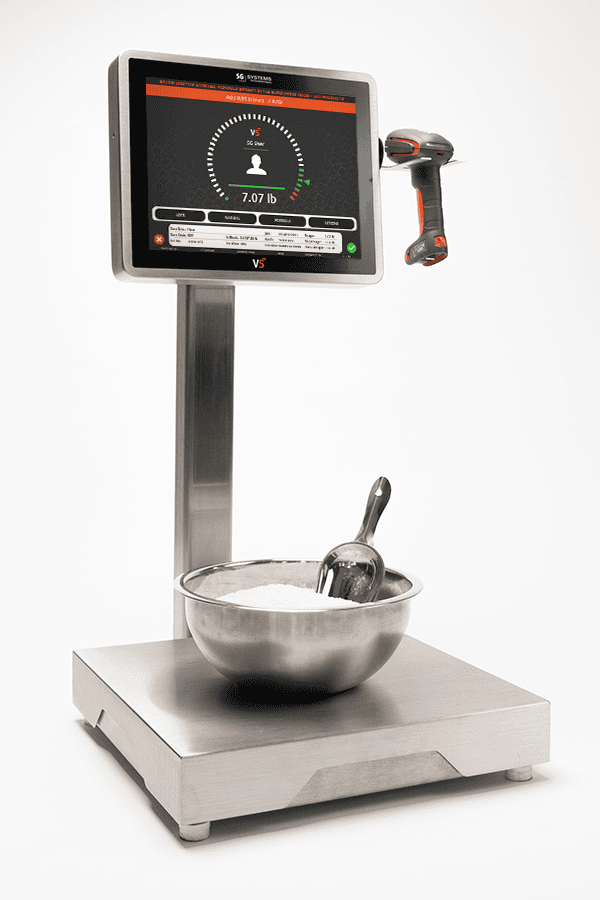
- V5 WMS as bakery inventory engine. V5 WMS manages item, lot, bin, zone, FEFO and batch-to-bin traceability for ingredients, WIP and finished goods.
- V5 MES as dough & production tracker. V5 MES runs sponge, dough, proofing, baking, slicing and packing, and updates inventory automatically as batches move through states.
- Trolley and pan tracking. Trolley IDs and pan/tin IDs are recorded as carriers for product; V5 tracks their flow across proofers, ovens, coolers and docks.
- Freezer and par-bake handling. V5 models freezers, racks and bays specifically for bakery, including dough ball and par-bake slotting and ageing.
- Integration to ERP/QuickBooks. Using the V5 Connect API, V5 pushes aggregated item-level inventory movements back to ERP or QuickBooks while keeping bakery-specific detail inside V5.
11) KPIs that show Bakery Inventory Management Software is working
- Inventory accuracy by zone: physical counts vs system for ingredients, dough WIP, frozen and finished goods.
- Waste & stale write-offs: trend of stale or time-expired product as a % of daily throughput.
- Silo and flour usage variance: planned vs actual flour and key ingredient usage by product family and day.
- Route fill accuracy: % of route orders delivered in full and on time, with correct mix.
- Mock recall time: time to identify all affected lots and routes for a suspect ingredient or dough batch.
- Allergen zoning incidents: number of inventory/route events that violate zoning rules (target zero).
12) Common pitfalls in bakery inventory management
- Treating freezers as black boxes. Knowing only “we have 10 pallets of par-bake” instead of the exact mix, age and location by rack.
- Using generic WMS without bakery logic. Systems that don’t understand sponge, proofing, racks or routes force awkward workarounds.
- Not tracking WIP. Inventory appears only as ingredients and finished goods; dough, sponge and par-bake are invisible.
- Manual route and return accounting. Drivers and sales reps adjust quantities on paper; the system is updated days later, if at all.
- Weak allergen and seed control. Seeds, nuts and toppings are tracked at purchase, but not at rack or route level.
13) Quick-start checklist for bakery inventory management
- Map your current flows: ingredients → silos → sponge/dough → ovens → freezers → routes → returns.
- Define a practical location model: zones (raw, dough, bake, cool, frozen, routes), bins/racks/trolleys and rules.
- Bring flour and key ingredients under lot and silo control; switch to scan-based intake and silo assignments.
- Start tracking at least one WIP category (e.g. dough balls or par-bake racks) as inventory, not just “in process.”
- Integrate route loading and returns into the inventory picture, not as separate spreadsheets.
14) FAQ — Bakery Inventory Management Software
Q1. How is Bakery Inventory Management Software different from a generic WMS?
Generic WMS deals with pallets and cases. Bakery Inventory Management Software understands flour silos, sponge, dough, proofers, racks, freezers, trolleys and routes. It models bakery-specific WIP states and flows, not just “boxes in bins.”
Q2. Do small bakeries really need specialised inventory software?
For a single artisan shop, paper and spreadsheets might suffice. For multi-line, multi-route, allergen-heavy or par-bake operations, specialised bakery inventory management becomes essential to tame waste, traceability and customer expectations.
Q3. Can Bakery Inventory Management Software work with QuickBooks?
Yes. QuickBooks can remain the financial ledger while V5 handles bakery-grade inventory control and production execution, pushing summarised item-level movements back into QuickBooks.
Q4. How does Bakery Inventory Management Software help with traceability?
By connecting ingredient lots in silos and stores to sponge and dough batches, to baked and sliced product, to routes and customers, it provides the genealogy needed for recalls, mock recalls and customer/retailer audits.
Q5. Can it help reduce waste and stale returns?
Yes. Better visibility into freezer and finished-goods inventory, combined with FEFO, route analytics and return tracking, helps reduce over-production, improve rotation and target specific products or customers where waste is high.
Q6. What is the minimum viable Bakery Inventory Management Software setup?
At minimum: controlled item and lot masters, a bakery-relevant location model (including silos, WIP zones and freezers), scan-based receiving and route loading, and basic batch-to-bin traceability for key product families. You can then layer on dough/sponge WIP, trolleys and route returns.
Related Reading
• Bakery Operations: Flour Scaling & Silo Weighing | Sponge and Dough System | Preferment Scaling
• Bakery Inventory & Flow: Dough Ball Freezer Inventory Management | Frozen Ingredient Slotting | Bakery Trolley Flow Control | Proofing Room Inventory Tracking
• Systems & V5: V5 Solution Overview | V5 WMS | V5 MES | V5 Connect API
OUR SOLUTIONS
Three Systems. One Seamless Experience.
Explore how V5 MES, QMS, and WMS work together to digitize production, automate compliance, and track inventory — all without the paperwork.

Manufacturing Execution (MES)
Control every batch, every step.
Direct every batch, blend, and product with live workflows, spec enforcement, deviation tracking, and batch review—no clipboards needed.
- Faster batch cycles
- Error-proof production
- Full electronic traceability

Quality Management (QMS)
Enforce quality, not paperwork.
Capture every SOP, check, and audit with real-time compliance, deviation control, CAPA workflows, and digital signatures—no binders needed.
- 100% paperless compliance
- Instant deviation alerts
- Audit-ready, always

Warehouse Management (WMS)
Inventory you can trust.
Track every bag, batch, and pallet with live inventory, allergen segregation, expiry control, and automated labeling.
- Full lot and expiry traceability
- FEFO/FIFO enforced
- Real-time stock accuracy
You're in great company

















How can we help you today?
We’re ready when you are.
Choose your path below — whether you're looking for a free trial, a live demo, or a customized setup, our team will guide you through every step.
Let’s get started — fill out the quick form below.