

Mushroom Traceability System
Mushroom Traceability System — Substrate, Rooms, Flushes, PTI Labels & FSMA 204 in One Chain
This topic is part of the SG Systems Global regulatory & operations glossary.
Updated November 2025 • mushroom traceability system, FSMA 204 KDE/CTE, PTI labels, cold chain, compost & grow-room genealogy • Fresh Produce, Pack-Houses, Value-Added & Ready-to-Eat
A modern Mushroom Traceability System connects substrate and spawn to grow rooms, flushes, pickers, clamshell packs, PTI labels and customer shipments. It links growing media and spawn lots, room and shelf/bed IDs, harvest sessions, cooling and storage, re-packs and mixed SKUs, and outbound pallets into one searchable genealogy. It must withstand scrutiny under 21 CFR 117, FSMA 204 KDE/CTE, GFSI schemes, the Produce Traceability Initiative (PTI), retailer requirements and data integrity expectations for electronic records.
“If you can’t answer which substrate, which spawn lot, which grow room, which flush, which picker, which clamshell, which pallet, which customer—without digging through clipboards—you don’t have mushroom traceability. You have a mushroom farm and a lot of faith.”
TL;DR: A robust Mushroom Traceability System ties compost and substrate production, spawn lots, room and shelf IDs, flushes and harvests, cooling and cold-chain, PTI case labels, re-pack operations, warehouse batch-to-bin traceability and outbound one-up/one-down traceability into a single system of record. It builds a searchable genealogy from growing media to store shelf that supports FSMA 204 traceability, retailer scorecards and rapid, surgical recalls.
1) Why a Mushroom Traceability System now — hard truths
- FSMA 204 has landed on produce. Mushrooms sit squarely inside the scope of FSMA 204 Key Data Elements (KDE) and Critical Tracking Events (CTE). “Farm name on a box” is not enough.
- Large retailers expect PTI-level precision. Clamshells and cases carrying PTI-style labels with GTIN, lot and harvest date are now standard for major chains—and they expect you to decode them instantly.
- Grow rooms are dense and dynamic. Multiple beds, varieties and flushes in a single room, plus repacks and mixed-pack SKUs, can destroy genealogy if you’re working on whiteboards and memory.
- RTE and value-added increase risk. Sliced, washed and mixed mushrooms move risk from “cook at home” to “ready to eat”; regulators and customers are less forgiving if your traceability story is weak.
- Labour turnover is high. Harvest teams change rapidly. If traceability depends on particular supervisors “who know where everything is,” you are exposed.
2) Scope of a Mushroom Traceability System
| Area | What the system controls | Glossary anchors |
|---|---|---|
| Substrate & Compost | Component lots, recipe, compost tunnel / phase IDs, pasteurisation records | Recipe & Formulation, Batch Genealogy |
| Spawn | Spawn supplier lots, inoculation batches, spawn rate, inoculation dates | Component Lot Traceability |
| Growing Rooms & Shelves | Room IDs, shelf/bed IDs, fill dates, varieties, environmental history | Temperature Mapping, Environmental Monitoring |
| Flushes & Harvest Sessions | Flush number, harvest dates/times, picker IDs, lots by SKU and grade | Lot Traceability |
| Cooling & Cold Chain | Pre-cool times, room IDs, pallet temperatures, dwell times | Temperature Mapping, Food Safety Plan |
| Packing & Grading | Clamshell SKUs, grades, pack line lots, mixed packs, label templates | Label Verification |
| PTI & Case Labelling | GTIN, harvest date, lot, grower/packer, location codes on cases | PTI, GS1-128 Case Label |
| Warehouse & Distribution | Batch-to-bin mapping, FEFO, load building, outbound pallets | Batch-to-Bin Traceability, Warehouse Locations |
| FSMA 204 KDE/CTE | Capture & link KDEs at growing, cooling, initial pack and shipping events | FSMA 204 KDE/CTE |
| Quality & Complaints | Appearance, shelf-life, foreign-material, spoilage & customer complaints | Complaint Handling, CAPA |
| Data Integrity | Users, audit trails, e-signatures, retention & recall readiness | Data Integrity, Audit Trail |
| Integrations | Farm systems, MES, WMS, ERP, cold-chain loggers, retailer portals | MES, WMS |
3) Compost, substrate & spawn — where mushroom genealogy starts
For mushrooms, traceability doesn’t start at harvest; it starts in the compost yard and spawn room.
- Substrate recipe control. Straw, manure, gypsum and other substrates are combined according to a controlled recipe. Each component lot is captured so later investigations can link quality back to inputs.
- Compost batch identity. Each compost or substrate batch has a unique ID with tunnel/phase information, temperatures, moisture levels and pasteurisation data.
- Spawn lot mapping. Spawn supplier lots and inoculation events are recorded per substrate batch. If a spawn lot is later questioned, the system can show exactly which rooms and flushes used it.
- Block/bag IDs. For operations using blocks or bags, each unit is labelled with substrate and spawn IDs so that downstream shelf/bed assignments remain traceable.
Without this foundation, a “mushroom traceability system” becomes purely a packing-line tool with no visibility into what happened in the growing cycle.
4) Grow rooms, shelves & flushes — mapping where mushrooms actually grow
Grow rooms are dense, high-value assets. Traceability needs to model them explicitly:
- Room & shelf topology. Each room has shelves or beds with IDs. Production batches (substrate + spawn) are assigned to these locations with dates and varieties.
- Environmental history. Temperature, humidity, CO₂ and airflow data from environmental monitoring systems are associated with the room and time windows.
- Flush identification. The system records flush number (1st, 2nd, 3rd flush, etc.), harvest start/end dates and yield by SKU and grade per room/shelf.
- Room sanitation & downtime. Cleaning and disinfection records are tied to each room and cycle, providing evidence for root-cause and HACCP validation.
If you can’t say which room and flush produced the mushrooms in a given clamshell or case, you can’t meaningfully narrow the scope of an investigation or complaint.
5) Harvest sessions, pickers & pack prep
Harvest is where substrate and spawn genealogy turns into discrete, saleable product:
- Harvest sessions. The system defines harvest sessions by room/shelf, date/time, SKU, grade and picker, capturing weights and destinations (loose bins, lugs, direct-to-pack).
- Picker identification. Pickers log on to devices or use ID badges; their contribution is recorded for both productivity and traceability.
- First cooling & staging. Harvested mushrooms are placed into labelled totes or lugs with room/flush identifiers and time stamps before cooling, enabling traceability into the cold chain.
- Yield analytics. Yield per room/flush/picker vs. compost and spawn inputs becomes visible, tying agronomy decisions to commercial output.
For value-added RTE operations, the ability to link a pathogen or spoilage issue back to specific rooms, flushes and pickers can make or break a root-cause investigation.
6) Cooling, cold chain & shelf-life control
Mushrooms’ shelf life is highly sensitive to temperature and handling. A Mushroom Traceability System ties cold-chain data directly to product lots:
- Pre-cool records. Time from harvest to pre-cool, cooler load IDs and temperature pull-down curves are recorded per lot or pallet.
- Cooler mapping. Batch-to-bin mapping shows exactly which pallets are in which cooler, row and level.
- Ongoing temperature monitoring. Data loggers, probes and door sensors feed into temperature mapping records tied to storage locations.
- FEFO & rotation. FEFO logic ensures older and high-risk product ships first, with electronic enforcement instead of floor folklore.
Cold-chain data, when connected to genealogy, turns “short shelf-life complaint” into “this pallet saw a temperature abuse event here, at this time, on this truck.”
7) Packing, clamshells, PTI & mixed SKUs
Packing is where mushrooms are assigned to consumer units, cases and markets—and where FSMA 204 and PTI expectations bite hardest:
- Line-level lot mapping. Each pack line has a lot definition that combines room/flush sources, time windows and SKUs. Changeovers and clean-downs are visible in the system, not just in operator notes.
- Clamshell and punnet IDs. Production records show how many consumer units and master cases were made from each source lot and time window.
- PTI case labels. PTI-style labels for mushrooms carry GTIN, lot, harvest date, packer, grower and location, often encoded in a GS1-128 barcode, aligning with PTI and retailer expectations.
- Mixed and value-added SKUs. For sliced, mixed-variety or added-value packs, the system records which source lots and varieties are present in each production run.
- Label verification.
Label verification checks ensure case labels and PTI data match product and destination.
When a case or PTI label is scanned, the traceability system should immediately reveal the underlying rooms, flushes, harvest sessions and cold-chain events.
8) FSMA 204 KDE/CTE, mock recalls & retailer expectations
FSMA 204 focuses on Key Data Elements (KDE) captured at Critical Tracking Events (CTE) across the supply chain. For mushrooms, that means rock-solid records at:
- Growing/harvest CTE. Which growing area produced the product (farm, ranch, GPS, room, block), when it was harvested, and in what quantity.
- Cooling CTE. When and where product was first cooled and at what temperatures.
- Initial packing CTE. When harvested mushrooms were first packed into consumer or bulk units and by whom.
- Shipping CTE. When cases left the site, on which loads, and to which customers—tying in ASNs and retailer purchase orders.
A Mushroom Traceability System stitches these KDEs into a coherent graph. Mock recall performance then shows whether, in practice, you can retrieve and use this information within the timeframes regulators and retailers expect.
9) Data integrity — trusted mushroom traceability records
Because mushroom operations often mix heavy manual labour with automated systems, data integrity controls need to be firm:
- Unique users & roles. Pickers, supervisors, QC and warehouse staff use individual logins or badges; shared logins are eliminated.
- Audit trails for critical events. Edits to lots, PTI data, harvest records and shipments are logged with who/what/when/why per Audit Trail expectations.
- Clock and time-zone control. Farm systems, pack-house, WMS and cold-chain loggers are time-synchronised so event sequences are reliable.
- Retention & retrieval. Records remain readable and available for the full retention period set by FSMA 204 and customers, as defined in Record Retention & Archival policies.
Without these controls, even well-structured genealogy can become suspect under audit, especially where multiple facilities and contract growers are involved.
10) Implementation playbook — building a Mushroom Traceability System
- Map your mushroom flow. Document how substrate, spawn, rooms, flushes, harvest, cooling, packing and shipping actually run today—per site and per product family.
- Stabilise your IDs. Standardise room, shelf/bed, compost batch, spawn lot, harvest lot, pack lot and PTI case identifiers. Kill duplicate or overlapping ID schemes.
- Instrument high-risk CTEs first. Prioritise FSMA 204 CTEs: harvest, cooling, initial pack and shipping. Add compost/spawn and repack/mixed SKU visibility next.
- Integrate pack-house and warehouse. Make sure PTI codes, WMS locations and shipment records share the same IDs and dates, so you don’t need spreadsheet crosswalks.
- Run FSMA 204-style drills. Practice tracing from a consumer pack or PTI case code back to rooms and forward to customers within FSMA 204 time expectations.
11) How people search for this (and what we cover)
Teams typically search for mushroom traceability system, FSMA 204 mushroom traceability, mushroom PTI labels, produce traceability system for mushrooms, grow room traceability, flush tracking, and fresh mushroom recall system. This page explains how a Mushroom Traceability System covers substrate and spawn, grow rooms and flushes, harvest and cooling, PTI and warehouse operations, FSMA 204 KDE/CTE and recalls as one continuous digital chain.
12) How this maps to V5 by SG Systems Global
V5 Traceability can act as a full Mushroom Traceability System by combining farm, pack-house and warehouse data into one platform:
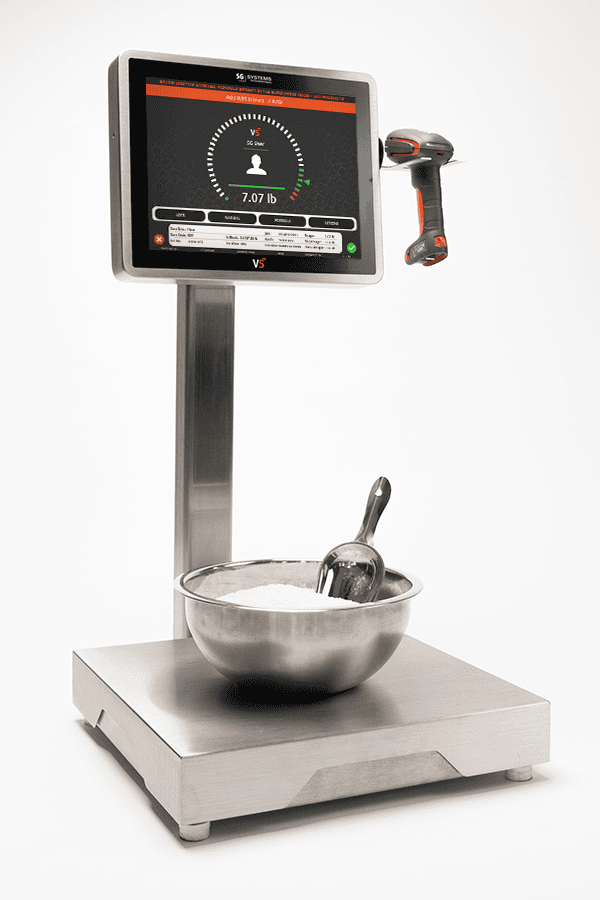
- Execution & batching. V5 MES manages substrate/compost batches, spawn applications, room and shelf assignments, flush IDs and harvest sessions.
- Cold store & distribution. V5 WMS provides batch-to-bin mapping, FEFO control and outbound load building for mushroom cases and pallets.
- Quality & FSMA 204. V5 QMS ties complaints, deviations and CAPA to specific lots, rooms, flushes and PTI codes; FSMA 204 KDE can be represented as linked records.
- Integration & APIs. The V5 Connect API integrates cold-chain loggers, ERP and retailer portals so traceability data flows end-to-end without manual re-keying.
See the overall landscape in the V5 solution overview.
13) KPIs that prove mushroom traceability control
- FSMA 204 KDE completeness: % of required KDE captured and linked for each CTE (harvest, cooling, packing, shipping).
- Mock recall time: minutes from PTI case or clamshell code to complete upstream/downstream trace report.
- Room/flush coverage: % of shipped volume with explicit room and flush identifiers in genealogy (target 100%).
- Cold-chain integrity: % of lots with complete, in-spec temperature history from harvest to shipping.
- Repack traceability: % of repacked/mixed SKUs whose underlying source lots are fully known.
- Untraceable cases: count of consumer or case units that cannot be traced to farm/room/flush within defined time (target zero).
14) Common pitfalls
- Room boards and sticky notes. Grow-room allocations and flushes are tracked on physical boards instead of in the traceability system.
- Generic harvest lugs. Harvest bins are unlabelled or re-used without proper ID, breaking the link between rooms and pack lines.
- PTI labels only for “big customers”. Only some customers get PTI-labelled product; others get weak or non-standard traceability.
- Opaque repack. Repacking and mixed SKUs are treated as “black boxes” with no clear source lot genealogy.
- Cold-chain blind spots. Pre-cool, consolidation and cross-docking events lack reliable temperature and time capture.
- No FSMA 204 rehearsal. Teams assume compliance but have never actually run a KDE-based trace request end-to-end against the live system.
15) Quick-start checklist for a Mushroom Traceability System
- Define and standardise IDs for substrate batches, spawn lots, rooms, shelves, flushes, harvest lots and PTI case codes.
- Introduce scanning and basic genealogy at harvest, cooling, packing and shipping before layering in more detail.
- Align PTI labels with GTIN, lot and KDE requirements for mushrooms across all major customers.
- Integrate room/flush data with packing and WMS systems; eliminate manual re-keying of lots.
- Instrument coolers and logistics with temperature logging tied to pallets and lots.
- Run at least one FSMA 204-style mock trace per quarter focusing on mushrooms, with IT, QA and operations at the table.
16) Extended FAQ
Q1. What is a Mushroom Traceability System?
A Mushroom Traceability System links substrate and spawn batches, grow rooms and flushes, harvest sessions, cooling, packing, PTI-labelled cases, warehouse locations and shipments into a single genealogy. It lets you trace mushrooms backwards to growing media and rooms and forwards to customers and markets.
Q2. How is a Mushroom Traceability System different from generic produce traceability?
Mushrooms have repeated flushes from the same substrate, dense grow rooms, strong temperature sensitivity and often mixed variety/value-added SKUs. A specialised system understands rooms, shelves, flushes and compost/spawn genealogy rather than only fields and cartons.
Q3. Does FSMA 204 definitely apply to mushrooms?
Mushrooms fall under FDA’s produce traceability expectations. Even where interpretation is evolving, major retailers and buyers increasingly require FSMA 204-style KDE/CTE evidence as part of their supplier programs.
Q4. Do we need PTI to have mushroom traceability?
Strictly, no—but PTI-aligned case labels and data structures make it much easier to exchange traceability data with distributors and retailers and to avoid having multiple, incompatible label formats.
Q5. What data is needed at minimum?
At a minimum: stable IDs for grower/packer, rooms and flushes, harvest dates, lots at pack line, PTI/GS1 identifiers on cases, and shipment records that tie customers back to these IDs.
Q6. How does a Mushroom Traceability System help with recalls?
If a pathogen, spoilage pattern or quality defect is discovered, you can identify which rooms, flushes and harvest sessions contributed to affected lots and which customers received them—while limiting the scope of withdrawal to truly related product.
Q7. Can small farms implement mushroom traceability without huge IT investment?
Yes. Many start with cloud-based platforms, rugged tablets and scanners, plus PTI-ready label printers. The key is disciplined ID and process design, not fancy hardware.
Q8. What is the minimum viable Mushroom Traceability System?
Controlled room and flush IDs, harvest lots tied to those IDs, PTI-style case labels, basic batch-to-bin mapping in cold stores, and simple tools to look up “where did this case come from?” and “where did this lot go?” within hours.
Related Reading
• Foundations: Traceability (End-to-End Lot Genealogy) | One-Up / One-Down Traceability | FSMA 204 KDE/CTE | Produce Traceability Initiative (PTI)
• Cold Chain & Risk: Temperature Mapping | Food Safety Plan | Mock Recall Performance
• V5 Products: V5 Solution Overview | V5 MES | V5 WMS | V5 QMS | V5 Connect API
OUR SOLUTIONS
Three Systems. One Seamless Experience.
Explore how V5 MES, QMS, and WMS work together to digitize production, automate compliance, and track inventory — all without the paperwork.

Manufacturing Execution System (MES)
Control every batch, every step.
Direct every batch, blend, and product with live workflows, spec enforcement, deviation tracking, and batch review—no clipboards needed.
- Faster batch cycles
- Error-proof production
- Full electronic traceability

Quality Management System (QMS)
Enforce quality, not paperwork.
Capture every SOP, check, and audit with real-time compliance, deviation control, CAPA workflows, and digital signatures—no binders needed.
- 100% paperless compliance
- Instant deviation alerts
- Audit-ready, always

Warehouse Management System (WMS)
Inventory you can trust.
Track every bag, batch, and pallet with live inventory, allergen segregation, expiry control, and automated labeling—no spreadsheets.
- Full lot and expiry traceability
- FEFO/FIFO enforced
- Real-time stock accuracy
You're in great company

















How can we help you today?
We’re ready when you are.
Choose your path below — whether you're looking for a free trial, a live demo, or a customized setup, our team will guide you through every step.
Let’s get started — fill out the quick form below.