

Recipe Traceability System
Recipe Traceability System — Versioned Formulas, Lots, Labels & Claims in One Record
This topic is part of the SG Systems Global regulatory & operations glossary.
Updated November 2025 • recipe traceability system, formula version control, allergen and nutrition claims, eBMR, PLM/MES/QMS integration • Food, Dietary Supplements, Pharma, Cosmetics, Chemicals, Meat & Sausage, Bakery
A modern Recipe Traceability System connects every formulation decision to every batch, every label, and every complaint. It links versioned recipes (BOMs, processing parameters, label texts, allergens, nutrition) to the lots that used them, then traces those lots to customers and markets. It must withstand scrutiny under 21 CFR 117, Part 111, Part 211, GFSI schemes, label and nutrition regulations, and data integrity expectations for electronic records under Part 11 and Annex 11.
“If you can’t answer which recipe version, which label text, which allergens, which nutrition basis, which batch—in seconds—you don’t have recipe traceability. You have guesses and binders.”
TL;DR: A robust Recipe Traceability System ties versioned recipes (ingredients, process steps, allergens, nutrition, label claims) to BMR/eBMR, lots, and shipments. It builds a searchable genealogy from Products & Formulas through Lot Traceability to CoA, labels, and complaints. When recipes change, you instantly see which batches and customers are impacted.
1) Why a Recipe Traceability System now—hard truths
- Formulation changes are frequent. Cost pressures, supplier changes, nutrition targets, and regulatory shifts drive constant recipe tweaks. Without recipe traceability, no one can prove exactly what changed, when, and where it landed.
- Allergen and label claims are unforgiving. “May contain…” is not a shield if you can’t show which recipe version and label text were used on the affected lots.
- Marketing moves faster than QA. New “clean label” and “high protein” claims hit the market, but supporting evidence (recipes, specs, validations) often lag. Recipe traceability keeps marketing in step with GMP reality.
- PLM alone is not enough. PLM/recipe development tools define recipes, but they rarely follow those recipes into shop-floor execution, lot genealogy, and complaints.
- Paper BMRs hide the real story. You can’t easily search across BMRs to see how many batches used “Formula v3.2” or which complaints map to which recipe changes.
2) Scope of a Recipe Traceability System
| Area | What the system controls | Glossary anchors |
|---|---|---|
| Recipe Master Data | Ingredients, quantities, units, process steps, yields | Products & Formulas, BOM |
| Version Control | Effective dates, change history, approvals | Document Control, Change Control |
| Ingredients & Allergens | Allergen flags, cross-contact risk, substitutions | Allergen Control |
| Nutrition & Claims | Nutrition basis, health claims, regulatory texts | Nutrition Panels |
| Process Parameters | Temperatures, times, pH, lethality, hold limits | CCP, HACCP |
| Execution Mapping | Which recipe version used for which batches | MES, eBMR |
| Lot Genealogy | Inputs (ingredients, intermediates) to outputs (finished lots) | Lot Traceability |
| Labels & Artwork | Label texts, artwork versions, language variants | Label Control |
| Markets & Rules | Recipe variants by market/customer, regulatory deltas | Specification Management |
| Complaints & CAPA | Link complaints to recipes, batches, lots, and changes | Complaints, CAPA |
| Data Integrity | Audit trails, approvals, retention, e-signatures | Part 11, Audit Trail |
| Integrations | PLM, MES, WMS, ERP, LIMS data flows | MES, WMS, LIMS |
3) Recipe master data & versioning—one source of truth
Recipe traceability starts with a disciplined recipe master. Each product has a controlled BOM and process description under Document Control. When anything changes—ingredients, percentages, yields, CCPs, label texts, claims—a new recipe version is generated with approvals and effective dates under formal Change Control. The Recipe Traceability System records which version is “live” in which plants, on which lines, and for which customers or markets.
4) Allergens, nutrition & claims—trace what you promise
Every recipe version carries allergen flags, nutrition basis, and claim logic:
- Allergen schema. Ingredients carry allergen attributes and cross-contact risk; recipes aggregate those into what appears on the label and in specs.
- Nutrition basis. Nutritional values derive from lab results, databases, or supplier specs and are tied to specific recipe versions and yield assumptions.
- Claims logic. “High protein,” “sugar free,” “vegan,” “gluten-free,” etc., map to the recipe version that substantiates them, plus relevant validations.
- Market-specific variants. Some markets require different salt levels, colorants, or claim rules; recipe variants for those markets must be tracked separately.
The Recipe Traceability System ties all of this to batch and lot data so that any complaint or regulatory query can be routed back to the exact recipe version and supporting evidence.
5) Execution mapping—recipe versions on the shop floor
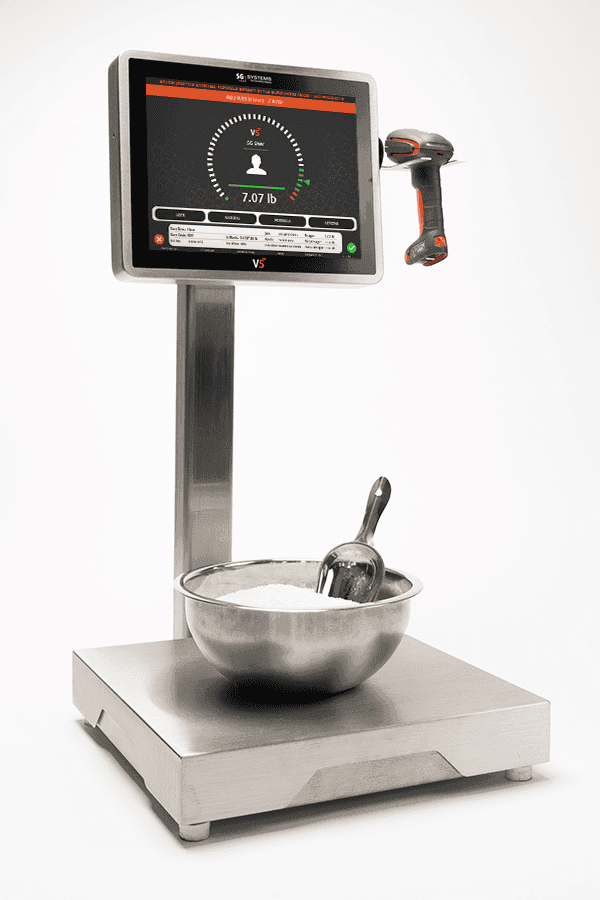
A Recipe Traceability System does not stop at master data. It must know exactly which batch used which recipe version in real operations:
- MES linkage. When a work order is released, the MES pulls the effective recipe version; that ID is recorded in the eBMR or DHR.
- BMP enforcement. The recipe drives ingredient additions, tolerances, and process parameters during execution; any deviation is flagged and, if approved, logged against that recipe version.
- Substitutions. Approved ingredient alternates are defined in the recipe; any unplanned substitution goes through Deviation and is tied to the batch and recipe version.
- Lot genealogy. Ingredient lots and intermediates consumed into each batch are linked to the recipe version in use at the time.
6) Labels & artwork—what the consumer sees is traceable
Labels must match what is in the product and the recipe that drove it. A Recipe Traceability System ties label and artwork versions to recipe versions and batches:
- Label masters. Ingredient statements, allergen declarations, nutrition panels, claims, and regulatory texts are stored with versions.
- Artwork and languages. Multiple languages and market-specific symbols are linked to the same or variant recipes.
- Version usage. The system records which label version was active at the time of packaging for each batch, lot, line, and market.
- Field decode. Date and trace codes on packages can be decoded by the system into recipe version, plant, and batch identifiers.
7) Recipe changes, impact analysis & governance
Every change to a recipe—ingredient switch, new supplier, changed target, updated claim—should trigger an impact analysis:
- Risk assessment. Assess safety, quality, regulatory, and marketing impact before making the change live.
- Effective dating. Decide when the new recipe version will go live and when older versions will sunset.
- Backward-looking analysis. For a defect or complaint, ask “which recipe version was running?” and “what changed just before these failures?”
- Forward-looking analysis. When regulators or customers tighten specs, simulate which recipes and products must change and what that affects.
8) Lot genealogy, complaints & CoA—joining recipes to reality
The power of a Recipe Traceability System is unlocked when recipes and lots sit in one graph:
- Upstream genealogy. From a finished lot, see the recipe version, intermediates, and ingredient lots that contributed to it.
- Downstream genealogy. From a recipe version, see all batches, lots, customers, and markets that used it.
- Complaints and returns. Complaints are logged with lot and product identifiers, which the system translates back to recipe version and changes.
- CoA generation. Certificates of Analysis pull from batch data, test results, and recipe specifications that were in force.
9) Data integrity—trusted recipe and batch records
Electronic recipe and traceability records must stand up to scrutiny:
- Unique users & e-signatures. Approvals, changes, and batch releases use individual accounts with Part 11-compliant signatures.
- Time synchronization. PLM, MES, WMS, and QMS share time sources; event order is reliable.
- Immutable audit trails. Recipe changes, label edits, and critical batch events are tracked with who/what/when/why; no overwrites.
- Retention & archival. Records are retained and retrievable for the life of the product and beyond per retention policies.
10) Implementation playbook—building a Recipe Traceability System
- Inventory your recipes. Gather current formulas and process descriptions; identify duplicates, “tribal knowledge,” and local variations.
- Put recipes under control. Move recipes into a controlled master with versioning, approvals, and effective dates.
- Define link points to MES/WMS/ERP. Decide where recipe IDs flow into work orders, batch records, labels, and shipments.
- Map labels and claims. Link recipes to label masters, nutrition panels, and claims; eliminate “manual” labels.
- Integrate complaints and CAPA. Ensure every complaint can be traced back to the product, lot, batch, and recipe version.
11) How people search for this (and what we cover)
Teams typically search for recipe traceability system, formula version control, traceable recipe management, linking recipes to batch records, allergen and label claim traceability, clean-label change control, and nutrition traceability. This page explains how a Recipe Traceability System connects development, operations, quality, and regulatory into one traceable chain.
12) How this maps to V5 by SG Systems Global
V5 Traceability can act as a Recipe Traceability System by linking versioned formulas to batch execution, eBMR, labels, and traceability graphs. Recipe and specification control can be managed in V5 QMS and product masters; execution and lot genealogy are recorded in V5 MES and V5 WMS; system-to-system data flows are handled via the V5 Connect API. See the overall landscape in the V5 solution overview.
13) KPIs that prove recipe traceability control
- Recipe version coverage: % of live products with recipes under formal version control (target 100%).
- Batch–recipe linkage: % of batches with explicit recipe version recorded in the eBMR (target 100%).
- Complaint to recipe trace time: minutes from complaint entry to identifying the recipe version and relevant changes.
- Label/version alignment: % of batches where label and recipe versions match the defined combination.
- Unauthorized recipe use: count of batches executed on obsolete or unapproved recipes (target zero).
- Change-to-failure correlation: ability to trace non-conformances back to preceding recipe or process changes.
14) Common pitfalls
- Excel as the recipe master. Spreadsheets with no approvals, no effective dates, and multiple conflicting copies undermine traceability.
- Unlogged local tweaks. Plant teams “tune” recipes locally (extra water, different bake time) without updating the master or recording these as controlled changes.
- Disconnected labels. Label texts and layouts evolve independently from recipes; no one can prove which label went with which recipe version.
- Missing market segmentation. Different markets have different recipes and claims, but there is no formal mapping between them.
- Complaints with no recipe context. Complaint handling focuses on products and lots but not on the underlying recipe versions and changes.
- No regular review. Recipes accumulate changes without periodic re-validation of nutrition, risk, and regulatory fit.
15) Quick-start checklist for a Recipe Traceability System
- Centralize recipes and process descriptions under Document Control with clear version IDs.
- Map recipes to products, markets, specs, labels, and claims; identify gaps and duplicates.
- Integrate recipe IDs into work orders, MES batch records, and WMS lot structures.
- Link label and artwork versions directly to recipe versions and packaging records.
- Ensure complaints and CAPA records capture product, lot, and recipe version as standard fields.
- Run periodic “recipe-centric” reviews: pick a recipe version and confirm you can list all batches, lots, customers, and complaints tied to it.
16) Extended FAQ
Q1. What is a Recipe Traceability System?
A Recipe Traceability System connects versioned recipes—including ingredients, process parameters, allergens, nutrition, and claims—to batches, lots, labels, shipments, and complaints. It allows you to see exactly which recipe version was in force for each batch and where those products went.
Q2. How is a Recipe Traceability System different from a PLM or formulation tool?
PLM tools focus on development and approval of recipes. A Recipe Traceability System links those recipes into MES, WMS, and batch records so you can trace recipes into production, lots, and customers.
Q3. Can I implement recipe traceability without changing my ERP?
Often, yes. Many organizations keep ERP as the financial and order backbone while layering recipe, MES, and traceability capabilities around it using APIs and connectors.
Q4. How does a Recipe Traceability System support allergen and nutrition compliance?
It ties allergen attributes and nutritional bases to specific recipe versions and then to batches and labels, so you can prove what was declared and why.
Q5. What data is needed to link recipes to batch records?
At minimum: a stable recipe ID and version, batch/work-order identifiers, and a mechanism in MES to record which recipe version drove a given batch.
Q6. How does this help with recalls and market withdrawals?
If a recipe change is implicated in a failure, you can quickly identify which batches and customers used that recipe version, and which markets or labels were affected.
Q7. How does recipe traceability work for contract manufacturers?
Co-mans use recipes owned by brand owners, but they still need to trace which recipe version they ran for each job, under which spec revision and label, to defend their execution and support their customers.
Q8. What is the minimum viable Recipe Traceability System?
Controlled recipes with versioning, integration of recipe IDs into batch records, a way to map recipes to labels and markets, and the ability to query “which batches used recipe X.Y?” and “which recipe version did this lot use?”
Related Reading
• Foundations: Products & Formulas | BOM | BMR | eBMR
• Traceability & Risk: Lot Traceability | One-Up/One-Down | FSMA 204
• Quality & Governance: Change Control | Complaint Handling | CAPA
• V5 Products: Solution Overview | V5 MES | V5 QMS | V5 WMS | V5 Connect API
OUR SOLUTIONS
Three Systems. One Seamless Experience.
Explore how V5 MES, QMS, and WMS work together to digitize production, automate compliance, and track inventory — all without the paperwork.

Manufacturing Execution (MES)
Control every batch, every step.
Direct every batch, blend, and product with live workflows, spec enforcement, deviation tracking, and batch review—no clipboards needed.
- Faster batch cycles
- Error-proof production
- Full electronic traceability

Quality Management (QMS)
Enforce quality, not paperwork.
Capture every SOP, check, and audit with real-time compliance, deviation control, CAPA workflows, and digital signatures—no binders needed.
- 100% paperless compliance
- Instant deviation alerts
- Audit-ready, always

Warehouse Management (WMS)
Inventory you can trust.
Track every bag, batch, and pallet with live inventory, allergen segregation, expiry control, and automated labeling.
- Full lot and expiry traceability
- FEFO/FIFO enforced
- Real-time stock accuracy
You're in great company

















How can we help you today?
We’re ready when you are.
Choose your path below — whether you're looking for a free trial, a live demo, or a customized setup, our team will guide you through every step.
Let’s get started — fill out the quick form below.