

Recipe Tracking Software
Recipe Tracking Software — From R&D Formulas to Lot-Tracked Batches and Labels
This topic is part of the SG Systems Global regulatory & operations glossary.
Updated November 2025 • recipe tracking software, recipe management, formulation history, version control, lot traceability, label & claims alignment, MES/WMS/ERP integration • Food & Beverage, Bakery, Sausage & Meat, Dietary Supplements, Pharma, Cosmetics, Ingredients & Dry Mixes, Consumer Products
Recipe Tracking Software is the digital memory of your formulations and how they have been used in real production. It connects what you intended to make (recipes, formulas, process parameters, label and nutrition data) with what you actually made (batches, lots, deviations, yields, complaints). It goes beyond static documentation: each time you run a batch, the system knows exactly which product & formula version you used, which ingredients and lots you consumed, which parameters you ran and what went out the door.
Where traditional “recipe books” and spreadsheets track ingredients and percentages, Recipe Tracking Software provides a living, auditable chain from R&D through production, warehousing and customer shipments—aligned with 21 CFR 117, Part 111, Part 211, ISO 13485, ISO 22716, GFSI schemes and modern data integrity expectations.
“If you can’t answer which recipe version, which lots, which parameters, which label, which customers—for any batch—you don’t have recipe tracking. You have a collection of guesses.”
TL;DR: Recipe Tracking Software combines recipe management, BOM control, batch execution and lot traceability into one system. It:
- Stores and versions formulas (ingredients, parameters, allergens, nutrition, claims).
- Links each production batch to the exact recipe version used and to actual ingredient lots and weights.
- Aligns labels, allergens, nutrition panels and claims with the recipe actually in force.
- Feeds batch records, genealogy and performance data into MES, WMS and ERP.
- Supports audits, recalls, reformulations and cost/yield optimisation with a clear, searchable history.
1) Why Recipe Tracking Software now — hard truths
- Formulations change constantly. Cost-down, supplier changes, new regulations, “clean label” projects and customer-specific variants mean that the recipe on paper rarely matches what you’re actually running.
- Excel is not an audit trail. Uncontrolled spreadsheets and local copies of recipes can’t tell you who changed what, when, why—or where old versions are still in use.
- Allergens and claims are unforgiving. If you can’t prove exactly which version of a recipe, with which allergens and claims, was used for a given lot, you have no defensible position in a complaint or recall.
- Yield and cost depend on what you actually weighed. Nominal recipes don’t tell you how much extra water, oil, fat, sugar or flavour was used on the line; real cost and performance depend on tracking recipe execution, not just design.
- Multiple plants and co-mans multiply risk. Without shared, tracked recipes, each plant or contract manufacturer drifts, and you lose control of your brand.
2) Scope of a Recipe Tracking Software platform
| Area | What the software tracks | Glossary anchors |
|---|---|---|
| Recipe & Formula Master | Ingredients, quantities, units, yields, process steps, variants | Products & Formulas, Recipe Management Software |
| Version Control & History | Version IDs, effective dates, change reasons, approvals, impact | Document Control, Change Control |
| Ingredients & Allergen Data | Allergen flags, source lots, substitutions, cross-contact risk | Allergens, Allergen Control Program |
| Nutrition & Claims | Nutrition basis, serving sizes, nutrient profiles, marketing claims | Supplement Facts Label, Claims Substantiation |
| Process Parameters | CPPs, setpoints, tolerances, line-specific settings, scaling rules | Critical Process Parameters (CPPs) |
| Batch Execution Link | Which recipe version used per batch, per line, per plant | Batch Recipe Execution (BRE), BMR/eBMR |
| Lot & Genealogy | Which raw lots, WIP and finished goods are associated with each recipe version | Lot Traceability, Batch Genealogy |
| Performance & Cost | Actual vs target usage, yield, scrap, rework, cost per kg/litre/unit | Yield Variance, Cost of Poor Quality (COPQ) |
| Compliance & Audit | Who changed what, when; which batches and labels used which version | Data Integrity, Audit Trail (GxP) |
| Integrations | Links to ERP, MES, WMS, LIMS, QMS, label systems, QuickBooks | MES, WMS |
3) Recipe master & version control — one source of truth for every plant
At the heart of any Recipe Tracking Software is a controlled recipe master:
- Structured formulas. Recipes are stored with clear ingredient lists, target quantities, units, preparation notes and yields—not buried in Word or Excel.
- Versioned changes. Every change—new ingredient, proportion shift, process tweak, label text update—is captured as a new version with IDs, effective dates and reason codes under Change Control.
- Global vs local variants. Base recipes can be branched into plant-specific or market-specific variants (e.g. different flour, sweetener, preservative, claim), each tracked separately.
- Role-based approvals. R&D, QA, regulatory, procurement and operations sign off on changes via workflows defined in Approval Workflows.
Instead of “Formula_v3_final_new_NEW.xlsx” sitting on someone’s laptop, the recipe lives in one place, with a complete history.
4) Linking recipes to batch execution and batch records
The biggest leap in maturity is when recipe tracking is wired directly into your execution:
- MBR/BMR integration. Each recipe version is linked to a Master Batch Record (MBR) configuration in MES; when a production order is released, MES stamps the batch with the correct recipe version ID.
- Batch-to-recipe mapping. Every batch record or eBMR includes the recipe version that drove it; QA can see at a glance whether the batch matched the intended formula.
- Multi-line awareness. The same recipe version may run on different lines or in different plants with slightly different parameters; Recipe Tracking Software records those associations.
- Deviations tied to recipes. Deviations and non-conformances during execution are linked to both the batch and the underlying recipe version, helping you see whether a change increased or reduced risk.
5) From recipe tracking to lot-level traceability
Real recipe tracking is inseparable from lot tracking:
- Upstream lot visibility. For any finished lot, you can see:
- The recipe version that drove the batch.
- All ingredient and packaging lots used (via component lot traceability and batch genealogy).
- Downstream exposure. From a recipe version or ingredient lot, you can see all batches and shipments affected by that recipe change or raw-material issue.
- One-up / one-down. Combined with shipping data, you can satisfy one-up / one-down traceability requirements in seconds.
When regulators or customers ask “which finished lots used this ingredient?” or “which recipe version was in market when this issue occurred?”, Recipe Tracking Software provides a direct answer.
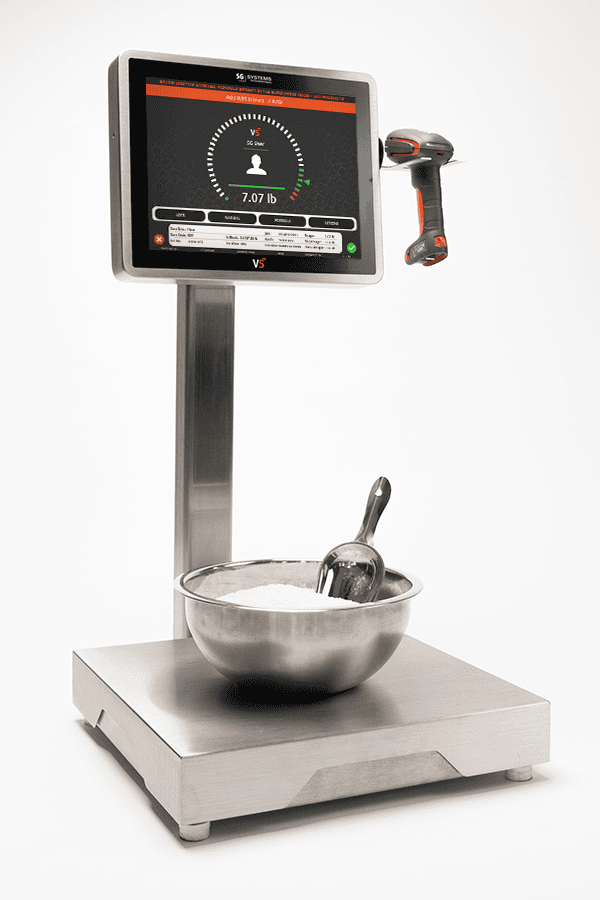
6) Ingredients, allergens, nutrition & claims — tracing what you promise
Recipe Tracking Software is the bridge between formulation and what you tell the world:
- Allergen mapping. Ingredients carry allergen tags (e.g. priority allergens, gluten, sulphites); recipes aggregate these into product-level allergen profiles that drive labels, cleaning rules and changeover logic.
- Nutrition basis. Nutrient values can be calculated from databases, COAs or lab results; each recipe version stores the basis and assumptions so you can update labels if inputs change.
- Claims control. “High protein”, “low sugar”, “vegan”, “paraben-free”, “sulfate-free”, “hypoallergenic” and similar claims are attached to recipes with links to claims substantiation evidence.
- Market variants. Differences in allowed additives, fortification levels, allergen rules or claims between markets (US vs EU vs Canada, etc.) are handled via recipe variants, not ad-hoc changes.
When a regulation or retailer spec changes, you can ask: “Which recipes, labels and customers are affected?”—and get a list instead of a headache.
7) Changing recipes safely — impact analysis and governance
Recipe Tracking Software turns “just tweak it” into a disciplined process:
- Impact assessment. Before a change goes live, you can see which products, labels, plants, lines, specs, validations and customers will be affected.
- Phased roll-out. You can introduce a new version in one plant or on one line, monitor performance, then expand—as opposed to flipping everything in one risky step.
- Historical context. When something goes wrong, you can see what changed in the recipe and when, and correlate that with deviations, complaints or yield shifts.
8) Performance, cost & optimisation with recipe tracking
Once recipes and batches are linked, you unlock powerful analytics:
- Target vs actual usage. Compare planned vs actual ingredient usage by recipe version, plant, line or shift; identify systematic over- or under-dosing.
- Yield and scrap by recipe. See which recipes or versions have higher loss, rework, hold or rejection rates.
- Supplier and lot impact. Combine recipe tracking with Supplier Quality Management to see how different suppliers, origins or potency bands affect performance.
- Cost-to-serve visibility. Recipe-level cost breakdowns (materials, rework, scrap) feed into margin analysis and pricing decisions.
9) Integrating Recipe Tracking Software with MES, WMS, ERP & QuickBooks
Recipe tracking is most effective when it’s not an island:
- MES integration. Recipes and parameters flow into MES; MES returns execution data (actual weights, times, temperatures, deviations) that are pinned to the recipe version.
- WMS integration. Recipes reference lot-controlled ingredients; WMS ensures the correct lots are staged and picked for each batch, enabling true genealogy.
- ERP/QuickBooks integration. Recipes provide structure for costing and planning in ERP or QuickBooks inventory control, while executed recipes feed real usage back for COGS and forecasting.
- LIMS/QMS integration. Test methods, specs, deviations and CAPA are linked to recipe versions and products, closing the loop between formulation, quality and operations.
10) How V5 provides recipe tracking across manufacturing and inventory
V5 Traceability incorporates recipe tracking throughout the platform:
- Recipe master in V5. Formulas and parameters live either in V5 itself or are synchronised from an existing PLM/ERP, then used by V5 MES.
- Execution mapping. V5 MES turns recipes into executable steps (weigh & dispense, batch control, line operations) and records the recipe version used on each batch and line.
- Lot & inventory linkage. V5 WMS ensures that the ingredients used in each recipe run are lot-tracked and bin-tracked, enabling end-to-end genealogy.
- Quality and claims. V5 QMS links deviations, CAPA, micro/stability, claims and complaints to specific recipes and versions.
- Integration layer. The V5 Connect API integrates V5 with QuickBooks, ERP, PLM, LIMS and label systems so recipe tracking data flows across your stack.
11) KPIs that show Recipe Tracking Software is working
- Recipe version coverage: % of active SKUs with recipes under version control (target 100%).
- Batch–recipe linkage: % of batches with an explicit recipe version recorded in the batch record (target 100%).
- Label/recipe mismatches: number of incidents where labels or allergen declarations did not match the recipe version actually used (target zero).
- Change-to-deviation correlation: number of deviations/complaints linked to recent recipe changes; trending down as governance improves.
- Yield variance vs recipe: difference between theoretical and actual yields per recipe version; used to target improvement work.
- Time-to-answer for “which batches used recipe X.Y?”: minutes to produce a complete list from the system.
12) Common pitfalls in recipe tracking
- “Tracking” only in R&D. Recipes are controlled in formulation tools, but production runs whatever local version the plant has on file.
- Unlogged local tweaks. Operators “add a bit more water” or “reduce bake time” without capturing that as a controlled parameter change.
- Labels decoupled from recipes. Marketing and packaging change texts and layouts independently; no one can prove which label was on which recipe version.
- No link to execution. Recipe tracking stops at master data; MES and WMS are not integrated, so genealogy is still manual.
- Ignoring data integrity. Spreadsheets and manual notes are treated as authoritative; no audit trail of who changed what, when.
13) Quick-start checklist for Recipe Tracking Software
- Inventory your current recipes: where they live, who edits them, and how many versions exist in the wild.
- Choose a central recipe master (V5, PLM or another system) and migrate key products into it with clear version IDs.
- Integrate recipe IDs into batch orders and MES, so each batch carries a recipe version reference.
- Link ingredient lots and labels to recipes via WMS and labelling systems.
- Run a “recipe-centric” mock investigation: pick a recipe version and prove which batches, lots and customers it affected using only the system.
14) FAQ — Recipe Tracking Software
Q1. How is Recipe Tracking Software different from generic recipe management?
Recipe management typically means authoring and storing formulations. Recipe Tracking Software goes further: it ties those formulations to real production batches, ingredient lots, labels and customers, and tracks changes and execution history over time.
Q2. Do I need a separate recipe tracking tool if I have an ERP or PLM?
Maybe, maybe not. If your ERP/PLM can truly manage versions, link to batch execution, track lot usage and support recalls, you may not need another system. Many ERPs/PLMs, however, stop at master data; V5 can act as the execution-centric recipe tracking layer that closes the loop.
Q3. Is Recipe Tracking Software only for food and beverage?
No. Any process industry with formulations and quality obligations benefits: dietary supplements, pharmaceuticals, cosmetics, agricultural chemicals, resins, paints, personal care, cleaners and complex consumer products.
Q4. How does Recipe Tracking Software help with audits and recalls?
It lets you show exactly which recipe versions were used on which batches and which ingredient lots and labels were involved, and which customers received the resulting product—without reconstructing the story from paper and spreadsheets.
Q5. Can Recipe Tracking Software improve R&D–operations collaboration?
Yes. R&D can see how their recipes perform in the real world (yields, deviations, complaints), and operations can request changes through structured workflows instead of informal emails or notes.
Q6. What is the minimum viable Recipe Tracking Software setup?
At minimum: a central, version-controlled recipe master; integration of recipe IDs into batch records; basic mapping of ingredient lots and labels to recipes; and simple reporting to answer “which batches used this recipe version?” and “which recipe drove this lot?”.
Related Reading
• Foundations: Recipe Management Software | Products & Formulas | Bill of Materials (BOM)
• Traceability & Quality: Lot Traceability | Batch Manufacturing Record (BMR) | Audit Trail (GxP) | Data Integrity
• V5 Platform: V5 Solution Overview | V5 MES | V5 QMS | V5 WMS | V5 Connect API
OUR SOLUTIONS
Three Systems. One Seamless Experience.
Explore how V5 MES, QMS, and WMS work together to digitize production, automate compliance, and track inventory — all without the paperwork.

Manufacturing Execution System (MES)
Control every batch, every step.
Direct every batch, blend, and product with live workflows, spec enforcement, deviation tracking, and batch review—no clipboards needed.
- Faster batch cycles
- Error-proof production
- Full electronic traceability

Quality Management System (QMS)
Enforce quality, not paperwork.
Capture every SOP, check, and audit with real-time compliance, deviation control, CAPA workflows, and digital signatures—no binders needed.
- 100% paperless compliance
- Instant deviation alerts
- Audit-ready, always

Warehouse Management System (WMS)
Inventory you can trust.
Track every bag, batch, and pallet with live inventory, allergen segregation, expiry control, and automated labeling—no spreadsheets.
- Full lot and expiry traceability
- FEFO/FIFO enforced
- Real-time stock accuracy
You're in great company

















How can we help you today?
We’re ready when you are.
Choose your path below — whether you're looking for a free trial, a live demo, or a customized setup, our team will guide you through every step.
Let’s get started — fill out the quick form below.