January 2026 — Global — In UK and EU meat, poultry, and seafood operations, traceability is not a back-office reporting function. It is a time-critical control system. In that sense, EU 178/2002 is best understood as an execution-and-evidence standard, not a legal abstraction. The regulation is often summarized as “General Food Law,” but the operational reality is sharper: it shifts scrutiny toward whether “unsafe” decisions were enforced at the moment of risk, whether traceability was coherent enough to constrain impact rapidly, and whether the organization can produce a reconstruction-resistant chain of evidence that links raw intake, cutting and processing events, chilled storage, dispatch, and downstream recipients without relying on retrospective narratives.
This distinction matters because animal-origin processing is structurally hostile to slow reconciliation. Product moves through many irreversible steps—cutting, portioning, deboning, blending, packaging, labeling, chilling, and dispatch—often under severe throughput pressure. The evidence chain is also physically dispersed: multiple rooms, multiple shifts, multiple cold stores, multiple carriers, and frequent rework or yield recovery loops. In practice, inspection conversations converge on the same outcome: can the site show a defensible evidence chain under the hygiene expectations of EU 852/2004 and the animal-origin specificity of EU 853/2004, while also meeting the UK enforcement reality shaped by UK Hygiene 2013? The question isn’t “do you have procedures?” It’s “can you prove control quickly, consistently, and without reconstruction?”
This press release frames traceability through that academic lens: control proven rather than workflow completed. It also summarizes how an integrated execution platform—implemented with disciplined computer system validation (CSV) practices—can reduce risk, increase audit defensibility, and make operations demonstrably safer. In the SG Systems Global model, V5 Traceability supports this integrated approach by linking MES execution, hygiene controls, cold chain evidence, labeling governance, and traceability outputs into a single operational record with governed interfaces to external systems, devices, and enterprise platforms.
In UK and EU animal-origin audits, traceability is less about “knowing the supplier and the customer” and more about proving—hour by hour—that the system maintained identity, protected cold chain integrity, enforced holds, and preserved an evidence chain that stands on its own.
1) Regulatory Context: Why Meat, Poultry & Seafood Traceability Behaves Like an Evidence Standard
The UK/EU animal-origin compliance model is often described as “hygiene + traceability,” but the operational truth is more integrated. EU 178/2002 provides the backbone logic: operator responsibility, “unsafe” decision posture, traceability expectations, and withdrawal/recall obligations when risk is suspected. Hygiene execution is anchored by EU 852/2004 and tightened for animal-origin processing by EU 853/2004. Inspection posture and sampling mechanics are increasingly standardized across the EU under EU 2017/625, while UK enforcement realities remain strongly shaped by local authority practice under UK Hygiene 2013.
Animal-origin operations also carry a distinctive accountability loop: what is cut, trimmed, rejected, or routed out of the food chain must still be accounted for. That is where EU 1069/2009 (animal by-products) becomes evidence-relevant. If the site cannot prove how affected product and by-products were categorized, segregated, and dispositioned, the investigation scope expands and confidence drops.
The key point is not that every UK site must operate identically to every EU site. The key point is that modern audit posture treats animal-origin traceability as an evidence network. If one part of the system is weak—lot identity at intake, segregation at cutting, cold chain evidence, packaging/label control, dispatch proof, or ABP routing—then the entire compliance story becomes contestable. In academic terms, traceability under pressure behaves like a socio-technical control system requirement: governance intent (procedures, acceptance criteria, training, status rules) must be translated into operational reality through an execution system that generates trustworthy evidence.
2) The Five-Part Audit Test: Attribution, Timing, Authority, Material Truth, and Evidence Integrity
While every inspection has its own path, the evidentiary pattern is remarkably consistent across animal-origin environments. The pattern is amplified because product moves fast and the consequences of uncertainty are high.
-
Attribution: Can the organization prove unique identity and accountable actions without shared credentials?
This is anchored in controlled access practices such as User Access Management, Role-Based Access, and governed Access Provisioning. -
Timing: Are records contemporaneous and time-anchored, or backfilled under pressure?
This is the operational meaning of data integrity and audit-trail completeness in GxP audit trails. -
Authority: At the moment of execution, did the operator and the system have authority to proceed?
In practice, that implies prerequisites and gating rules: training, role constraints, equipment eligibility, quarantine status, and release rules that prevent invalid actions. -
Material truth: Can the organization prove correct identity, correct status, correct lot, correct location, and correct linkage across transformations?
This is where end-to-end lot genealogy and one up / one down become minimum competencies, not aspirational features. -
Evidence integrity: Can the story be proven without manual reconstruction from disparate systems?
This is where integrated records, immutable logging, and coherent data models become compliance controls rather than IT preferences.
The critical takeaway is that auditors increasingly treat “workflow completion” as a weak proxy for control. The audit question is not whether a checklist exists; it is whether the system made incorrect execution improbable, caught exceptions at the moment they occurred, and preserved evidence that remains credible when documentation is challenged.
3) Where Traceability Fails in Animal-Origin Plants: The Transformation Problem
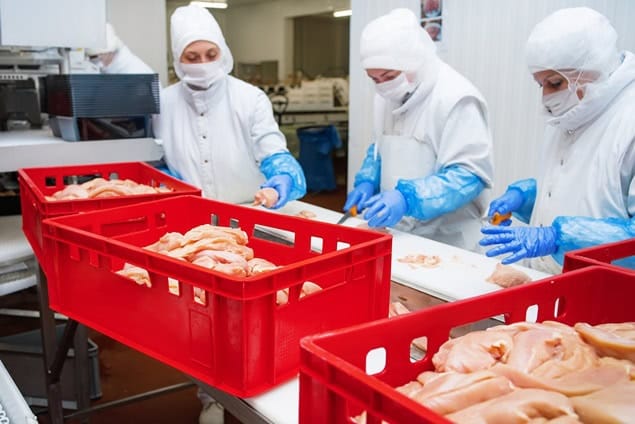
Meat, poultry, and seafood operations are transformation factories. Whole animals become primals, primals become cuts, cuts become portions, portions become trays, trays become cases, and cases become pallets. Some material becomes rework, trim, or co-products. Some becomes waste or ABP. Each step is a traceability risk because it can break identity if the system treats the event as “a production activity” rather than “a traceability event.”
Practically, the integrity of the traceability story depends on whether transformations are captured as structured records rather than inferred later. In your glossary ecosystem, this concept aligns naturally with data models such as transformation event records and the discipline of capturing “what changed” at the moment it changed. When transformations are captured late, the plant becomes dependent on memory, and memory is fragile evidence.
Under pressure, two failure modes dominate. First, “identity drift”: bins are relabeled incorrectly, lots are mixed without controlled rules, or partial lots are staged without clear status. Second, “location drift”: cold rooms and staging zones become congested, and operators place product where space exists rather than where the system expects it. If the record cannot prove identity and location, the safest decision under EU 178/2002 logic is broad action—broad holds, broad withdrawals, and broad customer notifications.
4) Cold Chain Proof: When Temperature Becomes the Evidence Chain
In animal-origin plants, temperature is not just a monitoring metric—it is often the boundary between “controlled” and “contestable.” Under EU 852/2004 and EU 853/2004, cold chain discipline becomes part of hygiene control. Under EU 2017/625, official sampling and enforcement posture frequently amplify the consequences of weak temperature evidence, because uncertain temperature control becomes a reason to expand investigation scope.
The operational risk is not “a temperature excursion happened.” The risk is “a temperature excursion happened and the site cannot prove what it did next.” This is why concepts like temperature-controlled storage, temperature excursion handling, and temperature logger alarm handling become evidence mechanisms rather than “monitoring paperwork.” The moment the alarm triggers, the system must be able to show: what was affected, what was held, who decided, and how disposition was justified.
In a mature control model, cold chain evidence is linked directly to status logic. If product is in a suspect zone or if an excursion occurs, the system routes impacted lots into quarantine and requires a defined disposition pathway. That is how “temperature data” becomes “control proven.”
5) Zoning, Segregation, and Changeovers: The Hidden Traceability Multipliers
Zoning failures are traceability failures. When raw-to-RTE boundaries drift, the plant’s evidence chain becomes contestable because contamination pathways become plausible and the record cannot show that barriers held. This is why animal-origin environments tend to converge on the same operational themes: enforced changeovers, verified sanitation outcomes, controlled traffic patterns, and disciplined line clearance.
At the record level, changeovers and sanitation are not merely “hygiene activities.” They are evidence events that explain why a transformation step remained controlled. Concepts such as equipment sanitization status tracking and electronic workstation line clearance illustrate the difference between “we say we clean” and “we can prove we cleaned, verified status, and blocked execution until status was acceptable.”
UK enforcement practice under UK Hygiene 2013 makes the operational consequence tangible: weak evidence speed and weak disposition discipline often escalate findings quickly. The plant’s ability to show control under pressure is what shapes outcomes.
6) ABP and Waste: EU 1069/2009 as the “Closure” Layer of Traceability
In meat, poultry, and seafood, a traceability story that ends at “finished goods shipped” is incomplete. Material streams continue into trim, rejected product, and by-products. EU 1069/2009 matters because ABP routing is a regulated evidence stream: categorization, segregation, controlled storage, controlled handoff, and disposition proof.
Under investigation, ABP and waste handling can become the hidden integrity test. If a lot is deemed suspect and must be destroyed or routed, the plant must be able to show what happened, when, and under what authority. That aligns naturally with chain of custody expectations and reduces blind spots that otherwise expand scope.
Put bluntly: if the plant can’t prove where the “bad” material went, it becomes harder to trust where the “good” material went. Closure matters.
7) Official Controls: EU 2017/625 and the Sampling-Driven Reality of Inspections
EU 2017/625 is the enforcement layer that standardizes how official controls are performed across the EU: inspection logic, sampling mechanics, and corrective action expectations. Operationally, sampling turns “possible risk” into “evidence-bearing risk,” which means the site’s response posture is tested under time pressure.
The most common failure pattern under official controls is not that the site lacks policies. It’s that evidence is fragmented. Traceability exists but is slow. Holds exist but are advisory. Records exist but cannot be produced in the inspection window. In your glossary ecosystem, readiness for time-bounded scrutiny aligns with concepts like 24-hour record response and recurring readiness exercises such as mock recall drills.
8) The “Prove It Now” Toolkit: Holds, Lot Status, and Rapid Retrieval
Under pressure, traceability reduces to three practical questions: “What is impacted?”, “Where is it now?”, and “Who received it?” If those answers require spreadsheet archaeology, the plant will default to broad action. A mature control model makes those answers retrievable as system outputs.
This is where status and visibility features become compliance controls. A coherent real-time lot status board reduces ambiguity. Enforced quarantine logic prevents shipping risk. Controlled packing and handoff practices reduce mis-shipments. And if an incident requires action, the site can respond without guesswork.
The audit implication is direct: a site that can produce a complete evidence pack quickly appears controlled. A site that cannot appears risky—even if its intentions were good.
9) System Architecture: Fragmented Truth vs Integrated Evidence
Many meat and seafood operations attempt to satisfy requirements with discipline layered onto fragmented tools: local temperature systems, separate labeling systems, spreadsheets for genealogy, paper logs for sanitation, and ad-hoc records for dispatch. That structure can function, but it tends to fail the evidence integrity test because it creates competing sources of truth. Under audit pressure, competing truths become inconsistencies, and inconsistencies become integrity risks.
Integrated execution systems reduce this risk by unifying event capture and traceability. In the V5 model, the operational record becomes the primary record: execution events, timestamps, identities, lot linkages, and controlled measurements are preserved in a coherent chain. That chain supports rapid retrieval and reduces reliance on human reconstruction.
Integration also implies disciplined interfaces. Systems that connect to enterprise platforms and equipment should do so through governed, auditable mechanisms—particularly when evidence depends on those interfaces. In your glossary ecosystem, that interface discipline is represented by concepts such as MES API gateway, message broker architecture, and MQTT messaging layer.
10) Validation and Implementation: Meeting Standards Through URS, IQ, OQ, UAT, and Evidence-Based CSV
A credible traceability system is not only about features; it is about implementation discipline. In regulated environments, implementation is part of compliance because the system must be demonstrated as fit for intended use. That is why organizations commonly structure deployments around a governed URS, risk-based CSV planning, and qualification evidence such as IQ, OQ, and UAT.
A recurring failure mode is “validation theater”: producing documentation that does not align with the actual risk drivers—cold chain, zoning discipline, transformation capture, ABP routing, dispatch proof, and retrieval speed. The alternative is risk-based validation that targets critical data, critical controls, and critical interfaces—especially those that affect lot identity, status enforcement, and rapid retrieval under inspection pressure.
In animal-origin environments, implementation quality is traceability quality: the system is only as defensible as the URS, qualification evidence, and operational controls that prove it is fit for intended use.
11) How V5 Reduces Risk: Traceability Under Pressure as a System Property
V5 Traceability is positioned around a simple principle: reduce reliance on retrospective reconstruction by making the execution record the primary record. In meat, poultry, and seafood terms, that means preserving transformation events, cold chain evidence, quarantine and disposition logic, dispatch proof, and ABP routing in a unified chain that supports rapid retrieval and reduces ambiguity.
Concretely, that integrated evidence chain is strengthened by:
- Traceable genealogy: tying transformations and movements to end-to-end lot genealogy, so “what happened” can be answered without inference.
- Status enforcement: using structured quarantine logic and controlled disposition to prevent shipping uncertainty.
- Cold chain evidence: linking temperature signals and responses (see temperature excursion) to lot status and decision records.
- ABP closure: connecting by-product and disposal routing under EU 1069/2009 discipline to the same evidence story.
In practical terms, V5’s traceability posture is delivered through the platform and product modules: V5 Solution Overview, Manufacturing Execution System (MES), Warehouse Management System (WMS), Quality Management System (QMS), and
V5 Connect (API).
The safety argument is not rhetorical. In animal-origin operations, risk is amplified by ambiguity: unclear lot identity across transformations, unclear cold chain responses, unclear status decisions, and unclear ABP routing. Ambiguity leads to broad holds, slow decisions, and weak defensibility under inspection. A unified, structured record reduces ambiguity, supports faster decision-making, and strengthens the defensibility of those decisions.
12) Bottom Line: UK & EU Animal-Origin Traceability Rewards Integrated Control Systems
The most important shift is not that documentation is irrelevant. The shift is that documentation alone is no longer persuasive when it cannot be anchored to primary execution evidence. Under modern UK/EU inspection practice, the strongest posture is to treat animal-origin traceability as a control system problem: govern transformations as traceability events, enforce cold chain responses as disposition events, preserve identity and audit trails, and unify the evidence chain so the record stands without reconstruction.
This is precisely where integrated execution platforms—and disciplined CSV implementation—change the compliance calculus. When the system is implemented with a governed URS, executed through IQ, OQ, and UAT, and governed through operational controls like access reviews, audit trail integrity, and validated backup/recovery, the result is not merely “digitization.” The result is control proven.
In UK and EU meat, poultry, and seafood supply chains, that is the difference between compliance that depends on heroics and compliance that is built into the operating system. These frameworks do not reward heroics. They reward evidence.